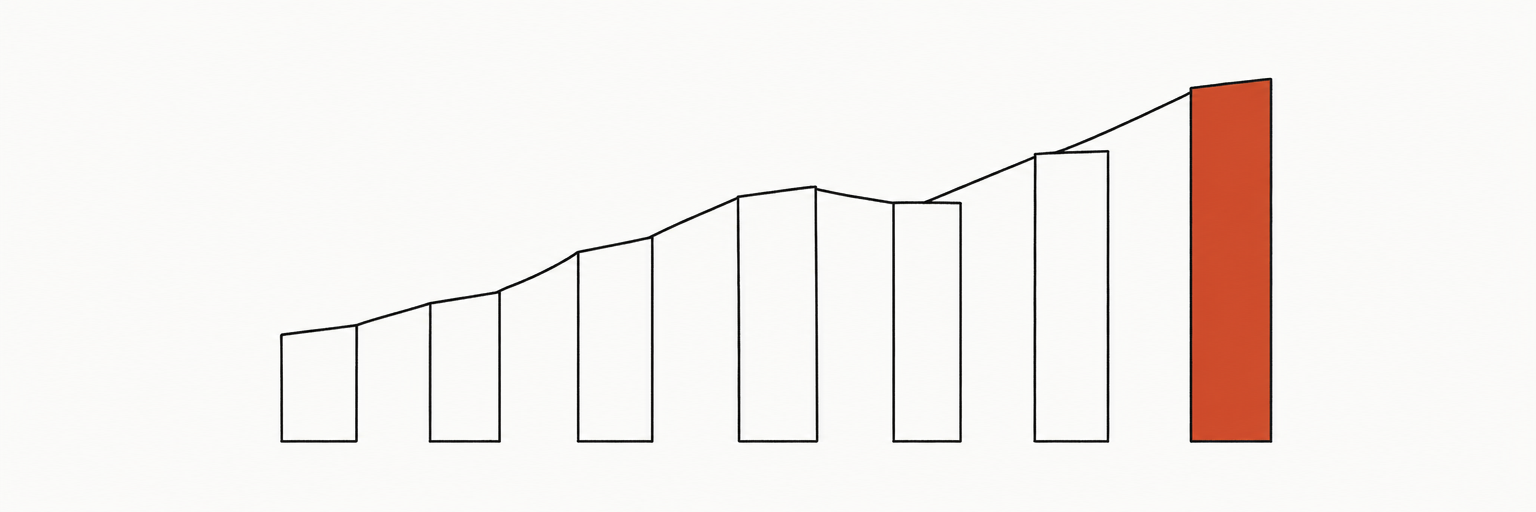
An index fund tracks a market index — like the S&P 500 — by holding all (or most) of the stocks in that index. Instead of trying to beat the market, it matches it.
How it works
The S&P 500 tracks the 500 largest US companies. An S&P 500 index fund holds shares in all 500, weighted by company size. When the S&P 500 rises 10%, your fund rises roughly 10%.
No stock-picking, no guessing, no fund manager making calls.
Why index funds beat most active investing
S&P Dow Jones publishes a SPIVA report tracking this every year. The numbers are consistent: over any 15-year period, roughly 90% of actively managed funds underperform their benchmark index. The main reason is fees.
- Active funds charge 1–2% per year; index funds charge 0.03–0.20%
- That gap compounds hard over time
A $10,000 investment over 30 years at 8% return:
- With a 1.5% fee: ~$57,000
- With a 0.05% fee: ~$96,000
The fee difference alone costs nearly $40,000.
Popular index funds to know
| Fund | Index tracked | Expense ratio |
|---|---|---|
| Vanguard VTSAX / VTI | Total US market | 0.03–0.04% |
| Fidelity FZROX | Total US market | 0.00% |
| iShares IVV | S&P 500 | 0.03% |
| Vanguard VXUS | Total international | 0.07% |
For most people, VTI + VXUS (or a single “total world” fund) covers everything.
Should you invest in one?
Yes, if:
- You have an emergency fund in place
- You’re investing for 5+ years
- You want to invest without spending hours researching stocks
- You’re investing through a 401k, IRA, or taxable brokerage
Not yet, if:
- You have high-interest debt (pay that first)
- You have no emergency fund
- You need the money within 3–5 years
How to get started
- Open a brokerage account — Fidelity, Vanguard, or Schwab
- For retirement: capture your full 401k employer match first, then a Roth IRA
- Buy a total market index fund (VTI or FZROX) or a target-date fund
- Set up automatic monthly contributions
- Don’t check it daily — time in the market beats timing the market
Start simple
Index funds are the boring, proven way most people actually build wealth. Warren Buffett has recommended them for ordinary investors for decades. Start with one fund, contribute consistently, and let compounding do the work.