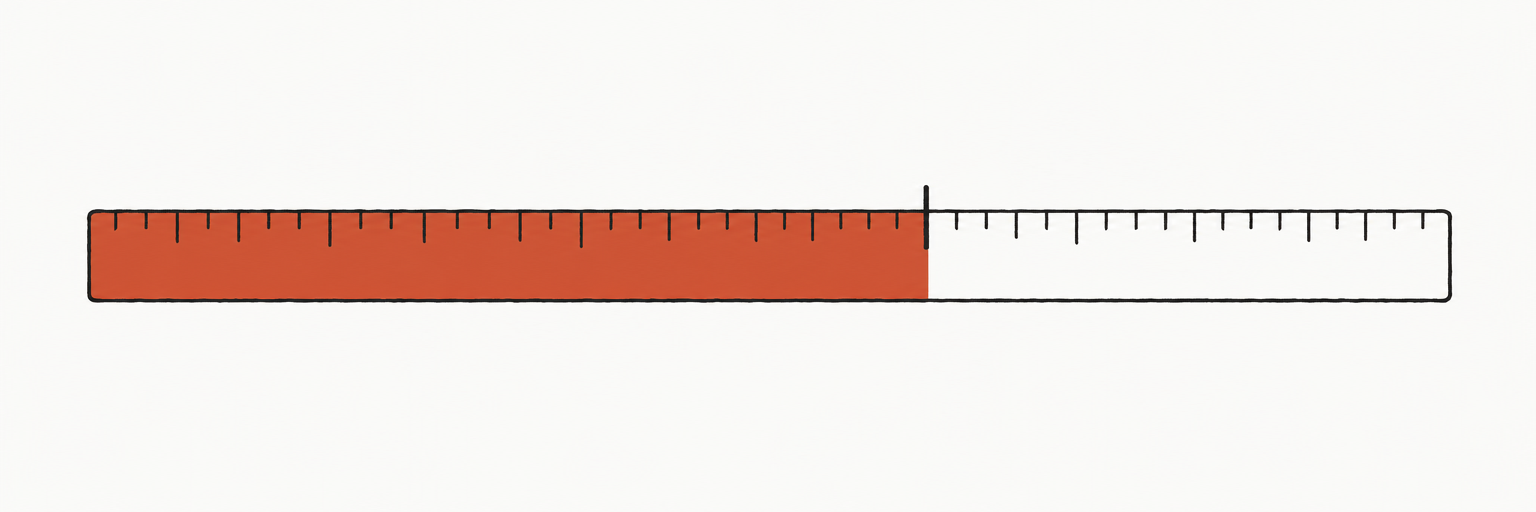
The standard advice is 3–6 months of expenses, but the right number depends on your situation.
The base calculation
Add up your true monthly must-pay expenses:
- Rent or mortgage
- Utilities and internet
- Groceries
- Insurance premiums
- Minimum debt payments
- Transportation (gas, transit pass)
This is your monthly baseline — what your emergency fund needs to cover.
How many months you need
| Situation | Target |
|---|---|
| Stable job, dual income household | 3 months |
| Single income household | 4–5 months |
| Self-employed or freelancer | 6 months |
| Commission-based income | 6+ months |
| Working in a volatile industry | 6 months |
| Has dependents or chronic health issues | 6 months |
If multiple risk factors apply, lean toward the higher end.
Build it in stages
You don’t need the full amount before you start investing or paying down debt. A practical sequence:
- $1,000 starter fund — covers most minor emergencies (car repair, ER copay)
- Full emergency fund — build this while making minimum debt payments
- Full investing — once you hit your target, redirect that savings rate to investments
Where to keep it
Your emergency fund needs to be liquid (accessible within 1–2 days), separate from your checking account so you don’t spend it on non-emergencies, and earning something. High-yield savings accounts (HYSAs) currently pay 4–5% APY.
Solid options: Marcus by Goldman Sachs, Ally, SoFi, or your credit union’s HYSA. Avoid locking it in a CD — early withdrawal penalties defeat the point.
What counts as an emergency
An emergency fund covers unexpected, necessary expenses that would otherwise require debt:
- Job loss
- Medical bills
- Major car repair
- Emergency home repair (burst pipe, broken furnace)
It’s not for vacations, sales, planned car replacement, or irregular-but-predictable bills — those get a sinking fund instead.
Getting there
Most people with 3 months saved sleep noticeably better. Start with $1,000, build to your 3–6 month target in a high-yield savings account, and don’t invest aggressively until it’s there.